 Klaron

Understanding Nutritional Foundations for Male Well-being
Key Foods and Essential Vitamins for Informed Dietary Choices
Welcome to Klaron
Klaron is an independent educational resource dedicated to explaining the principles of healthy nutrition and general well-being. We believe that understanding food, vitamins, and minerals is fundamental to making informed decisions about your health and lifestyle.
Our mission is to provide clear, evidence-based information about nutritional foundations without medical advice, commercial bias, or pressure. Whether you're interested in learning about essential nutrients, the role of whole foods, or how to support your body through balanced eating, you'll find comprehensive guidance here.
Educational content only. No promises of outcomes.
The Building Blocks of Male Nutrition
Good nutrition starts with understanding what your body needs. The foundation of healthy eating consists of several key categories of nutrients, each playing a distinct role in maintaining energy, supporting muscle function, and promoting overall well-being.
Proteins
Building blocks for muscle, tissue, and enzymes
Fats
Essential for hormone function and nutrient absorption
Carbohydrates
Primary energy source for daily activities
Vitamins
Vital for immune function and metabolic processes
Minerals
Support bone health, nerve function, and hydration
Water
Critical for hydration and all bodily functions

Essential Vitamins for Men's Health
Vitamins are organic compounds that support numerous bodily functions. Each vitamin has specific roles in maintaining health and energy. Here's an overview of several key vitamins and their natural food sources:

Vitamin D
Function: Supports bone health, calcium absorption, and immune function. Produced by the body when exposed to sunlight.
Sources: Fatty fish (salmon, mackerel), egg yolks, mushrooms, fortified milk products.

B-Complex Vitamins
Function: Support energy production, brain function, and red blood cell formation.
Sources: Whole grains, legumes, leafy greens, chicken, eggs, almonds, and nutritional yeast.

Vitamin C
Function: Supports immune system, collagen production, and acts as an antioxidant.
Sources: Citrus fruits, berries, bell peppers, tomatoes, broccoli, and leafy greens.
Minerals Vital for Well-being
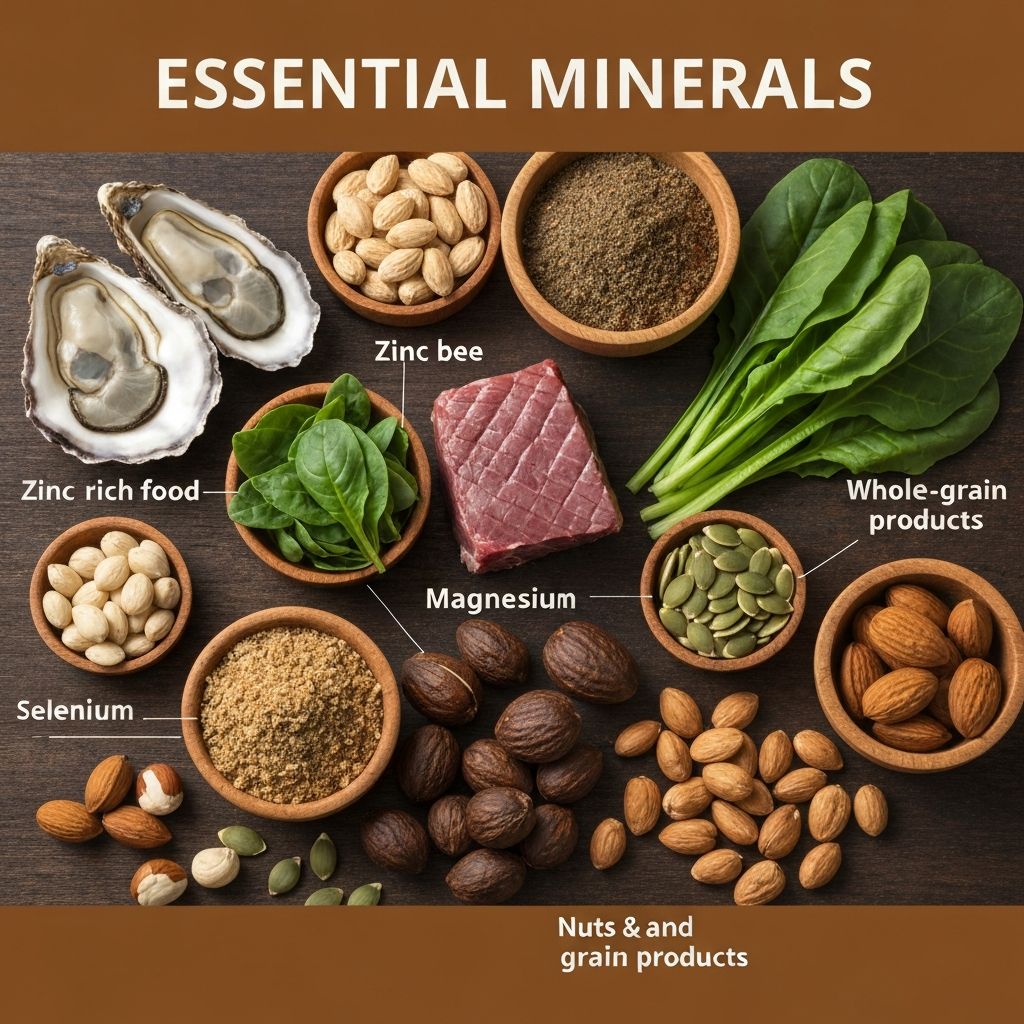
Minerals are inorganic nutrients essential for bone structure, nerve signaling, muscle function, and maintaining proper fluid balance. The following table outlines several key minerals and their roles:
| Mineral | Primary Functions | Natural Sources |
|---|---|---|
| Zinc | Supports immune function, wound healing, and protein synthesis | Oysters, beef, chickpeas, cashews, pumpkin seeds |
| Magnesium | Regulates muscle function, energy production, and nervous system | Pumpkin seeds, almonds, spinach, black beans, dark chocolate |
| Selenium | Acts as an antioxidant, supports thyroid function | Brazil nuts, tuna, turkey, eggs, whole grains |
| Potassium | Maintains fluid balance, supports heart and muscle function | Bananas, sweet potatoes, spinach, beans, avocados |
| Calcium | Builds and maintains strong bones and teeth | Dairy products, leafy greens, fortified plant milks, sardines |
The Power of Whole Foods
Whole, unprocessed foods are nutrient-dense and provide sustained energy. Unlike processed foods that often contain added sugars, unhealthy fats, and additives, whole foods retain their natural fiber, vitamins, and minerals.
Benefits of Whole Foods:
- Higher nutrient density and bioavailability
- Rich in dietary fiber for digestive health
- Promote stable blood sugar levels
- Support sustained energy without crashes
- Contain beneficial plant compounds and antioxidants

Hydration: A Core Element of Health
Water is the foundation of every biological process. Proper hydration supports digestion, nutrient absorption, temperature regulation, and cognitive function. Here's why staying hydrated matters:
- Nutrient Transport: Water carries vitamins and minerals to cells and removes waste products.
- Temperature Regulation: Sweating during activity helps cool the body; adequate hydration maintains this process.
- Digestive Function: Water aids in breaking down food and supporting regular digestive processes.
- Cognitive Performance: Even mild dehydration can affect concentration, mood, and mental clarity.
- Joint Lubrication: Water keeps joints flexible and supports mobility.
- Kidney Function: Adequate hydration supports the body's natural detoxification processes.
General guideline: While individual needs vary based on activity level and climate, many health resources suggest aiming for consistent daily water intake. Listen to your body's signals—thirst is a good indicator of hydration needs.
Understanding Macronutrients

Macronutrients—proteins, fats, and carbohydrates—form the foundation of your diet. Each serves unique functions and should be part of a balanced eating pattern.
Proteins
Amino acids are the building blocks of life. Proteins support muscle maintenance, enzyme production, and immune function. Aim for a variety of sources including fish, poultry, legumes, nuts, and eggs.
Fats
Healthy fats support hormone production, nutrient absorption, and brain function. Focus on unsaturated fats from sources like olive oil, avocados, nuts, and fatty fish.
Carbohydrates
Complex carbohydrates provide sustained energy and fiber. Choose whole grains, vegetables, legumes, and fruits over refined carbohydrates.
Antioxidants and Their Role
Antioxidants are compounds that help protect cells from oxidative stress. This protective role is valuable as part of a balanced diet rich in plant-based foods. Many whole foods contain natural antioxidants including vitamins C and E, selenium, and plant polyphenols.
Antioxidant-Rich Foods Include:
Berries (blueberries, raspberries), leafy greens (spinach, kale), nuts (almonds, walnuts), green tea, dark chocolate, and colorful vegetables. Eating a rainbow of fruits and vegetables naturally ensures a broad spectrum of protective compounds.
Dietary Fibre: Benefits and Sources

Dietary fiber is the indigestible part of plant foods. It plays a crucial role in digestive health, blood sugar regulation, and supporting beneficial gut bacteria.
Types of Fiber:
- Soluble Fiber: Dissolves in water, supports cholesterol and blood sugar balance. Found in oats, beans, and apples.
- Insoluble Fiber: Helps move food through the digestive system. Found in vegetables, whole grains, and nuts.
Benefits:
- Supports regular digestive function
- Helps maintain stable energy levels
- Promotes satiety and balanced appetite
- Feeds beneficial gut bacteria
Balanced Meal Planning Principles
Creating balanced meals ensures you receive a spectrum of nutrients. Rather than focusing on single nutrients, think about meal composition and variety.
Key Principles:
- Include Protein: Every meal should contain a protein source to support satiety and muscle maintenance.
- Add Vegetables: Fill half your plate with vegetables—raw, cooked, or roasted—for fiber, vitamins, and minerals.
- Choose Whole Grains: When including grains, opt for whole-grain versions to maximize fiber and nutrient content.
- Incorporate Healthy Fats: Add oils, nuts, seeds, or avocado to support nutrient absorption and satiety.
- Vary Your Choices: Eating different foods throughout the week ensures a diverse nutrient intake.
- Pay Attention to Portions: Balanced portions of each food group support overall nutrition without excess.

Limitations and Context
Important Note: All information on Klaron is educational in nature and does not replace professional medical or nutritional advice. Individual nutritional needs vary significantly based on age, activity level, health status, and personal circumstances. The information presented here represents general principles and should not be considered personalized recommendations.
Everyone's dietary needs are unique. Before making significant changes to your diet or lifestyle, consult with qualified healthcare professionals or registered dietitians who can provide personalized guidance based on your individual situation.
Explore More
Klaron offers comprehensive educational content on nutrition, well-being, and the role of food in supporting health. Browse our resources to deepen your understanding of nutritional principles and make informed dietary choices.
Explore Nutrition for Men View FAQ